More Than Visual: The Creator Möbius of Web3 Graphic Designers
In this series of articles from Radiant Labs, we've learned about Web3 audiences and their interests in credibility, utility, timing and identity. We also observed that improving our understanding of these audiences through archetypal classifications, made up of personas with distinct characteristics, can help projects scale more organically and holistically. We then examined the influence creator archetypes have on reshaping the consumer acquisition funnel. Today, we will look at the effect Web3 graphic designer personas have on community and ecosystem building, and how graphic designers act as translators, amplifiers, and growth surfaces in Web3.
Graphic designers are visual storytellers who specialize in creating brand identities, marketing assets, and user interfaces for decentralized technologies such as blockchains, NFTs, cryptocurrency projects, and the metaverse. Because blockchain technology is complex and product roadmaps often unfold over long development timelines, there are many opportunities to involve graphic designers throughout a project's Web3 consumer acquisition strategy, both before and after launch.
Like all creators, what defines Web3 designers is not the medium they work in, but the function they perform. Web3 designers explore new ways for people to understand a project, and they encourage people to talk about it and stay connected to it. They bridge gaps, while also signaling important events and opportunities. Graphic designers in Web3 are essential not only at launch, but also for the broader adoption of blockchain technologies over time. Whether they are hired in-house or work independently, they help ensure that dApps and user experiences are not only functional, but also accessible and enjoyable to use.
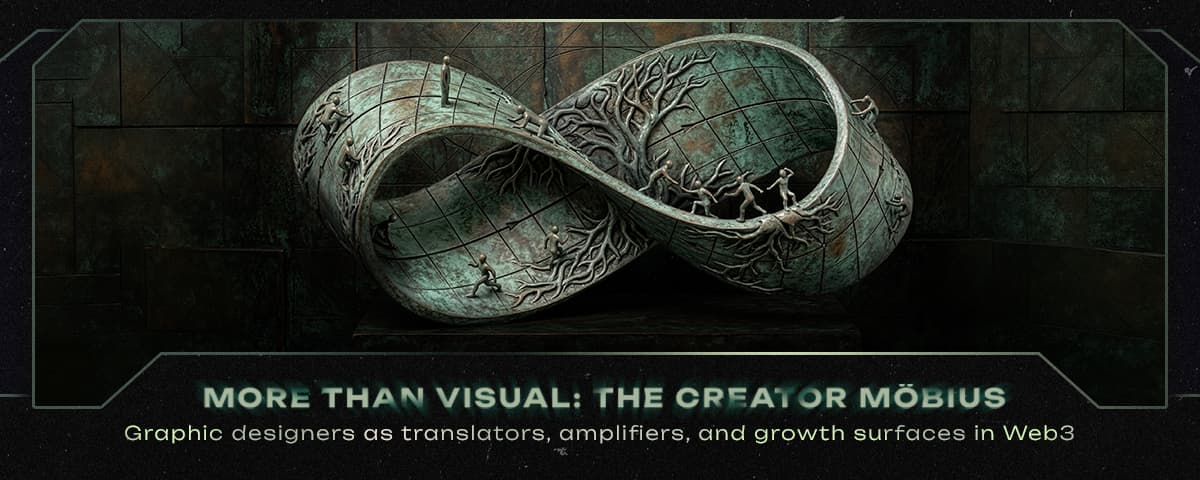
Designers bridge the gap between complex blockchain technologies, such as smart contracts and wallet connections, and everyday users by prioritizing trust, transparency, and user sovereignty. They create visuals that are trustworthy, engaging, and often futuristic. In many ways, they act like Möbius strips, creating pathways that bring consumers back to a project again and again through the cultural signals they shape and reinforce.
A founder-led marketing funnel can generate attention without generating attachment. It can bring people in, but it may not give them a meaningful reason to stay. Graphic designers connect culture and art to participation. They transform complex ideas into formats that people can recognize, engage with, and repeat. They create interpretation, and they signal it through the art, fashion, and aesthetics they employ.
Let us look at the different personas and traits often found among graphic designers in Web3.
Web3 Brand/Visual Designer
Develops the visual identity, including logos, color palettes, and typography, that helps blockchain projects appear both trustworthy and innovative.
UI/UX Designer (dApp Specialist)
Focuses on creating intuitive user interfaces for decentralized applications, ensuring that complex actions such as wallet connections and token swaps feel user-friendly.
Motion Graphics Designer
Creates animated logos, social media assets, and interactive media elements that enhance user engagement.
NFT/Digital Artist
Specializes in creating digital art, collectibles, or generative art for NFT projects.
Product/Graphic Engineer
A hybrid role that bridges design and coding, including CSS and HTML, to ensure that designs are implemented accurately in Web3 products.
Creativity in Web3 spans markets and tokens, but it also extends across social trends, fashion, and cultural interests. Because of this, Web3 graphic designers do more than create standard visual assets. They also operate across user communities as those audiences arrive, engage, and remain connected throughout the life of a project. They are present during preparation, launch, maintenance, and beyond.
Graphic design is therefore not just a support function. It is a core feature of a project's development and environment, shaping audience experience from top-of-funnel participation through user transformation and conversion. The work of Web3 graphic designers can help hold communities together as projects attempt to filter out users who are only there to extract value, have limited interest, or lack genuine attachment. In doing so, design can strengthen trust and transparency.
By identifying where trust is increasing, and among which groups, projects can better understand where, when, and with whom to make sustainable community investments. This becomes especially important as early excitement fades and the volatility created by extractive participants begins to normalize.
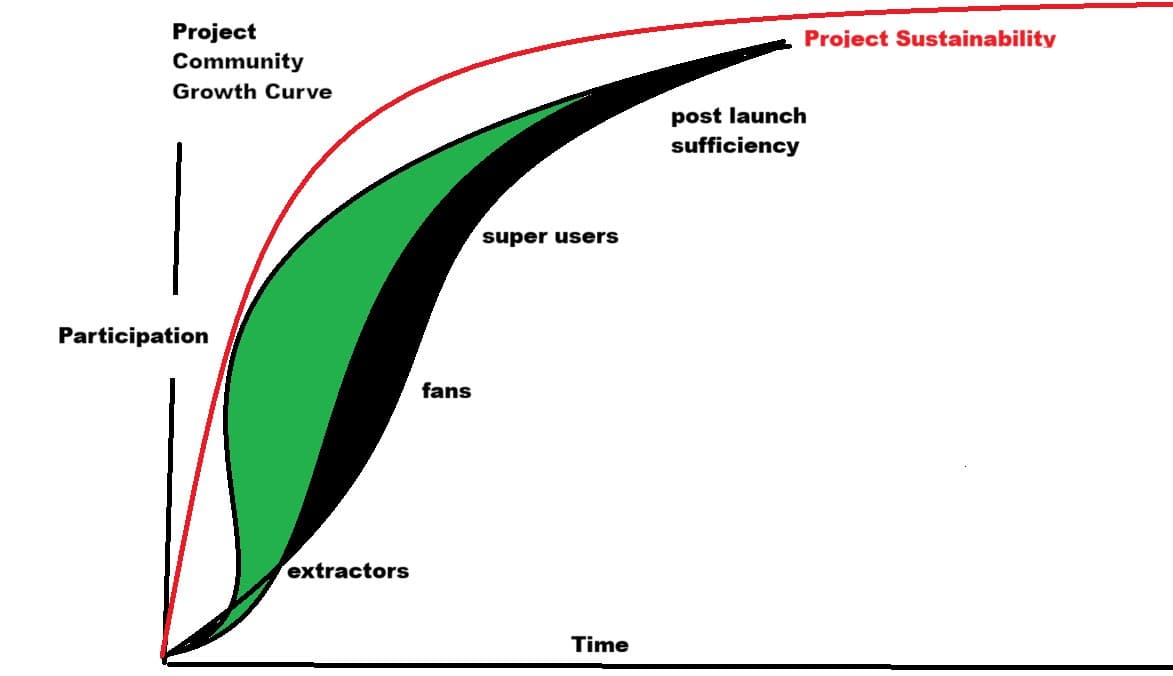
The Möbius strips that Web3 graphic designers walk return a project's message back to itself, but designers can also turn consumers in different directions as they use a product and participate in its features. In this way, designers help create the durable attachments needed for parallel expansion, differentiation, and inflationary growth. Founders and project planners who recognize this rotational aspect of participation, and who understand how creative design influences it, can grow more sustainably than those who overlook this ever-present dimension of Web3.
In our view, that is why Web3 designers should not be treated as accessories added after launch. Designers expand the number of ways a project can be entered, understood, and grown, and that changes both the shape and trajectory of the project. Graphic designers give people reasons to care that are not purely transactional. They help transform projects from something a user merely tries into communities that help hold an ecosystem together.
For more information on how to harness the impact of graphic designers within your project, send Radiant Labs a DM.
Follow Radiant Labs for more insights on Web3 marketing, community building, and creative experiments.
Follow @RadiantLabsHQ on X →